MediPay is a financial-health platform connecting healthcare payments, banking, investments, and e-commerce through a unified API-powered ecosystem.
Scrollable mockups: scroll inside a phone to see the whole screen


🔒 NDA Project
Client details, product name, and data shown in this case study have been anonymised. The design process, functionality, and outcomes remain true to the original work.
Project Background
MediPay had strong API infrastructure for HSA management and healthcare payments, but lacked a cohesive user experience. We partnered with them to design a unified ecosystem including the Consumer Portal, Responsive Mobile Experience, API Sandbox, and an e-commerce healthcare benefits experience.
Outcome
Simpler, clearer, connected
3
Connected Products
Responsive consumer portal, Admin Sandbox, and healthcare e-commerce, designed as one ecosystem.
1
Shared Design System
Reusable components across every product, handed over for the client's team to extend.
↓
Reduced Complexity
Plain-language UI and guided flows measurably reduced confusion around HSA rules.
Responsive, modular, ready for future iOS/Android apps.
Full simulation + event tooling for rapid partner integration.
Annotated specs lowered uncertainty, accelerated build timelines.
Problem
- No single place to track medical expenses
- Opaque bills, payments, and HSA balances
- Confusing tax rules and contribution limits
- Friction-heavy onboarding flows
- No tools for employer-level HSA management
- No clear connection between healthcare benefits and spending/use in real-world contexts
Solution
- Unified portal for all healthcare finances and benefits
- Plain-language UI with inline HSA guidance
- Clear separation of contributions and withdrawals
- Role-based IA for individuals, employees, and employers
- Integrated healthcare e-commerce experience (ABC Health OTC)
- Branded, developer-friendly API Sandbox
DISCOVER
Understanding the problem
Healthcare finances in the US are highly fragmented and difficult to manage. Users struggle with medical bills, HSA contributions, reimbursements, and payment tracking across multiple systems.
While MediPay had strong backend infrastructure and APIs, the experience lacked a unified interface that could support real-world healthcare financial and benefit workflows.
At the same time, Lynx aimed to expand into healthcare e-commerce, enabling members to use their benefits across a wider ecosystem of healthcare products and services.
Users
Three types, one platform

Individual
Self-funded HSAs
- Track spending & contributions
- Pay medical bills
- Store receipts & documents
- Manage investments

Employee
Employer-funded HSAs
- Use HSA funds for expenses
- View contribution history
- Access employer benefits
- Manage beneficiaries

Employer Admin
Multi-employee management
- Manage employee HSAs in bulk
- Monitor contributions
- Handle enrollment flows
- Access reporting
Research & Analysis
To better understand the ecosystem, we explored:
- Existing healthcare-finance workflows
- Modern fintech application patterns
- HSA management systems
- API documentation experiences
- Responsive healthcare platforms
We identified that users preferred fintech-inspired experiences that felt clear, guided, and trustworthy rather than traditional healthcare portals.
We also identified an opportunity to connect healthcare finance with real-world usage through an integrated e-commerce experience for eligible medical products and services.
Key User Pain Points
- Difficulty tracking expenses, payments, and HSA balances
- Confusing healthcare financial terminology and tax rules
- Fragmented systems for bills, receipts, and reimbursements
- Limited visibility into benefits usage
- No unified experience across healthcare finance and commerce
- Lack of a seamless way to use healthcare benefits in real-world purchases
DEFINE
Problem Statement
Healthcare finances are overly complex and fragmented. Users need a simple, unified way to track expenses, manage HSAs, access benefits, and use healthcare-related services across a connected ecosystem.
DEVELOP
UX Strategy
The design direction focused on making healthcare finance feel approachable, transparent, and easy to navigate.
We used familiar fintech patterns combined with simplified healthcare terminology to reduce friction and build trust.
Key Challenges
Hard problems, clear solutions
Challenge 01
Healthcare + banking UX is complex, users were overwhelmed by terminology, tax rules, and fragmented flows.
- Plain-language labels with no jargon
- Inline tooltips explaining HSA rules
- Clear separation of contributions vs. withdrawals UI
Challenge 02
Multiple user types required different workflows and permissions within the same system.
- Role-based information architecture
- Conditional UI per user type
- Separate dashboards for each role
Challenge 03
The API Sandbox was functional but too technical, cluttered, and difficult for developers to navigate and understand.
- Branded developer portal with improved UX
- Simplified navigation for APIs, webhooks, and events
- Clear information hierarchy and structured documentation
Challenge 04
Healthcare benefits had no direct connection to real-world usage through products and services.
- MediPay Health OTC integrated e-commerce experience
- Unified benefits usage across finance and shopping
- Omnichannel access (web, in-store, phone-ready structure)
DELIVERABLES
Two product surfaces

DELIVER
UI Design
The interface combined modern fintech visuals with healthcare accessibility principles to create a clean and trustworthy experience.
Consumer Online Portal
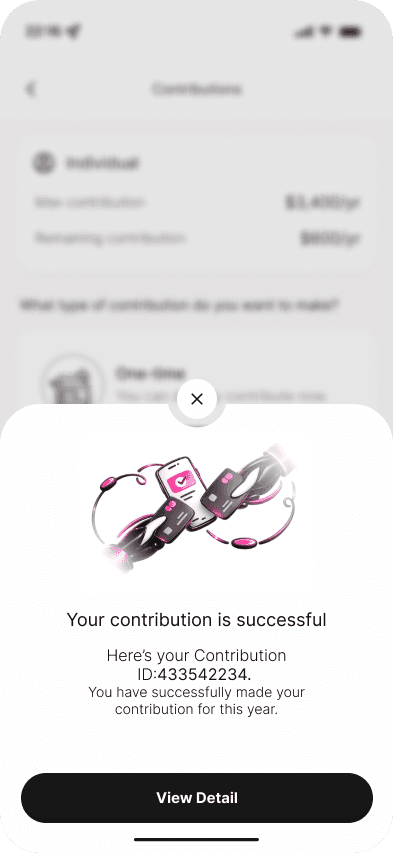
A responsive web platform designed to help individuals, employees, and employers easily manage healthcare finances. The portal streamlines HSA management, contributions, disbursements, receipt tracking, investments, card controls, documents, settings, and secure enrollment workflows through a simple and intuitive experience.

Scrollable mockups: scroll inside a phone to see the whole screen
API Sandbox
A branded developer portal built to simplify API integration and testing. The sandbox provides clear documentation for authentication, API references, webhooks, simulations, versioning, events, and exception handling, creating a more seamless developer experience.

MediPay Health OTC E-Commerce Experience
A healthcare e-commerce and benefits platform that enables users to access medical essentials, wellness products, and services through a unified digital experience.
Built on MediPay's infrastructure, the platform supports omnichannel engagement across online, mobile, in-store, and phone channels. It connects members with qualified medical expenses, healthcare products, and wellness services, creating a seamless bridge between healthcare benefits and real-world usage.
The experience focuses on accessibility, trust, and scalability, allowing users to easily utilize their healthcare benefits while connecting providers, retailers, and members within a single ecosystem.

Impact
The unified design system helped MediPay move toward a scalable healthcare-fintech ecosystem by:
- Reducing complexity in healthcare financial workflows
- Improving clarity in HSA and benefits management
- Enabling expansion into healthcare e-commerce
- Strengthening developer experience through API tooling
- Creating a foundation for future mobile-native applications
Reflection
This project challenged us to design across healthcare finance, APIs, and e-commerce simultaneously.
By connecting these systems into a unified ecosystem, we created a scalable experience that supports individuals, employers, and developers while laying the foundation for MediPay's long-term product vision.
Outcome
Simpler, clearer, connected
3
Connected Products
Responsive consumer portal, Admin Sandbox, and healthcare e-commerce, designed as one ecosystem.
1
Shared Design System
Reusable components across every product, handed over for the client's team to extend.
↓
Reduced Complexity
Plain-language UI and guided flows measurably reduced confusion around HSA rules.
Responsive, modular, ready for future iOS/Android apps.
Full simulation + event tooling for rapid partner integration.
Annotated specs lowered uncertainty, accelerated build timelines.
"We didn't just design screens, we designed a new relationship between people and their healthcare finances."
